

FISH CARE DURING THE RAINY SEASON: WHAT TO DO WHEN FISH BECOME WEAK AFTER RAIN?
The rainy season brings natural water to fish ponds, but it can also cause rapid changes in pond conditions. Rainwater, surface runoff, and cloudy weather may affect water temperature, pH, and dissolved oxygen (DO). If these changes are not monitored promptly, fish may experience stress, reduced feeding, abnormal swimming behavior, or weakness.
Therefore, fish care during the rainy season should be proactive rather than relying only on increased feeding or supportive products. Proper fish care during the rainy season involves regularly monitoring water quality, managing the pond environment, and identifying unusual changes in fish behavior at an early stage. These practices can help reduce weather-related stress and maintain more stable farming conditions.
Why Are Fish More Likely to Experience Stress During the Rainy Season?
After heavy rainfall, especially when rain continues for a long period or weather conditions change suddenly, pond conditions can fluctuate significantly. This is an important time to pay closer attention to fish care during the rainy season and monitor the pond for unusual changes.
One key factor is dissolved oxygen (DO). During cloudy days, reduced sunlight can lower photosynthetic activity in algae and aquatic plants, while fish, microorganisms, and organic matter decomposition continue to consume oxygen. If dissolved oxygen levels fall too low, fish may become stressed, swim near the surface, or show unusual surface-gathering behavior. Therefore, monitoring DO is an important part of fish care during the rainy season.
Heavy rain can also disturb the water column. In ponds where temperature and water quality are stratified, strong mixing may bring deeper water with lower oxygen levels toward the surface, causing water conditions to change rapidly. Farmers should therefore monitor appropriate water-quality parameters and observe how fish respond after rainfall.
In addition, rainwater flowing from surrounding areas may carry soil, organic matter, or other substances into the pond. After heavy rain, farmers should therefore check not only the water level but also water color, turbidity, odor, and fish behavior. These checks are essential for effective fish care during the rainy season and can help farmers respond more proactively to changes in pond conditions.
1. Check the Pond Immediately After Heavy Rain
One important principle of fish care during the rainy season is to inspect the pond promptly after heavy rainfall.
Farmers should check:
- Whether the water level has risen too quickly.
- Whether the water has become unusually turbid.
- Whether the water color has changed significantly.
- Whether trash, branches, or other debris have entered the pond.
- Whether fish are surfacing or gathering unusually in certain areas.
- Whether fish activity or feeding has decreased.
- Whether water inlet, outlet, and overflow systems are functioning properly.
If unusual signs are detected, farmers should not immediately apply multiple water-treatment products at the same time. First, determine whether the problem is related to oxygen levels, water quality, feeding, or fish health.
Identifying the underlying cause before taking action can help prevent inappropriate treatment and avoid creating additional fluctuations in the pond environment.
 2. Pay Special Attention to Dissolved Oxygen
 2. Pay Special Attention to Dissolved Oxygen
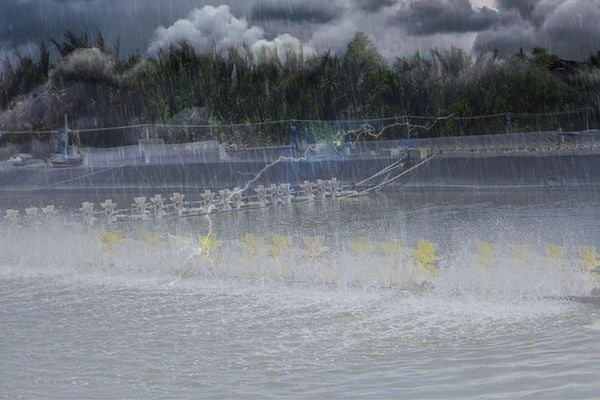
Dissolved oxygen is essential for fish activity and health. When oxygen levels become too low, fish may experience stress, reduced activity, and, in severe cases, mortality. Therefore, during fish care during the rainy season, dissolved oxygen should receive particular attention, especially after prolonged rainfall.
A common warning sign of low oxygen is fish gathering near the surface or gasping for air, particularly around early morning. If this occurs across a large area of the pond, farmers should check dissolved oxygen levels and respond promptly when possible.
If a DO meter is available, farmers should measure dissolved oxygen in the pond, particularly during periods when oxygen depletion is more likely. In high-density ponds with large amounts of fish and organic matter, regular oxygen monitoring becomes even more important for effective environmental management.
When dissolved oxygen is low, farmers may increase aeration or operate paddle wheels and aeration equipment appropriately for the pond's size and design. The same operating approach should not necessarily be applied to every pond because effectiveness depends on stocking density, water depth, pond area, and available equipment. Appropriate adjustment can improve fish care during the rainy season and help reduce risks associated with low oxygen.
3. Monitor pH and Other Water-Quality Parameters
Heavy rainfall can alter several characteristics of pond water. Therefore, fish care during the rainy season should include regular monitoring of important environmental parameters.
Farmers should pay attention to:
- pH.
- Dissolved oxygen.
- Water temperature.
- Alkalinity.
- Ammonia and nitrite, particularly in high-density ponds or ponds with high organic waste loads.
Both excessively low and high pH, as well as rapid pH fluctuations, can cause stress in fish. Alkalinity helps buffer the water and can reduce fluctuations in pH. When alkalinity is low, pH may fluctuate significantly throughout the day.
Therefore, farmers should not automatically add lime or chemicals simply because it has rained. Water adjustments should be based on actual water-quality test results, pond conditions, and appropriate technical guidance.
4. Manage Feeding During Rainy Days
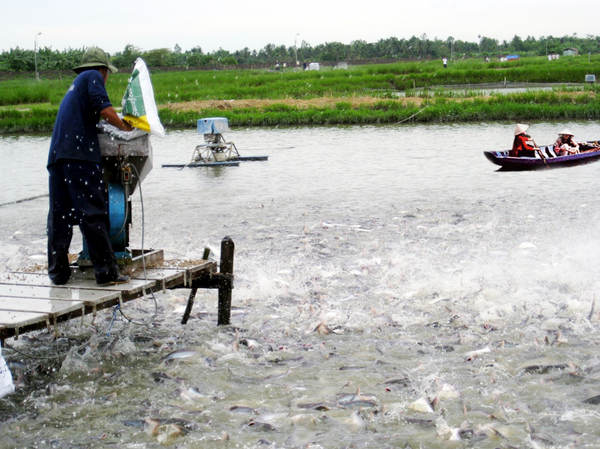
Changes in weather may cause fish to become less active and feed less during certain periods. If excessive feed is provided when fish are feeding poorly, uneaten feed can decompose and increase the organic matter load in the pond. Therefore, during fish care during the rainy season, farmers should pay close attention to the actual feeding response of the fish.
Farmers should observe feeding activity before determining the appropriate feed amount.
If fish are feeding poorly, the amount of feed can be reduced appropriately. Farmers should then monitor the fish and gradually increase feeding again when fish become active and resume normal feeding behavior.
Do not force fish to consume the full feed ration when pond conditions are unstable.
Proper feed management is also an important part of fish care during the rainy season because it helps reduce excess nutrients and organic matter in the pond. When organic matter accumulates, decomposition can increase oxygen demand and contribute to changes in water quality.
 5. Prevent Rainwater From Carrying Contaminants Into the Pond
After heavy rain, farmers should inspect the areas surrounding the pond, particularly locations where surface runoff may flow directly into the pond.
Water from roads, livestock areas, or agricultural land may carry soil, manure, organic matter, or chemical substances. If not controlled, these sources can negatively affect pond water quality.
Particular attention should be paid to preventing water that may contain agricultural chemicals from flowing directly into the pond.
If incoming water has an unusual color, odor, or other abnormal characteristics, farmers should investigate the water source and take appropriate measures to prevent potentially unsafe water from entering the pond. This is an important part of fish care during the rainy season.
6. Observe the Fish Instead of Relying Only on Water Color
Water color can provide some information about pond conditions, but it should not be used alone to assess the overall environmental or health status of fish. Therefore, during fish care during the rainy season, farmers should combine water-color observations with direct monitoring of fish behavior.
After rainfall, farmers should observe:
- Whether fish are swimming actively.
- Whether fish are gathering unusually near the surface.
- Whether fish are feeding less.
- Whether fish are rubbing against surfaces, swimming in circles, or losing balance.
- Whether there are scattered dead fish.
- Whether the gills, skin, or fins show abnormal signs.
If fish are surfacing in the early morning, particularly when the behavior occurs across a large portion of the pond, low dissolved oxygen should be considered as one possible cause, and oxygen should be checked when equipment is available.
If fish mortality continues or multiple signs of disease appear, farmers should collect appropriate samples and seek assistance from qualified aquaculture technicians or diagnostic facilities. The cause of disease should not be determined solely from a few external symptoms.
7. Avoid Applying Too Many Products Too Quickly
When weather conditions change, some farmers may immediately use multiple water-treatment products or medications after noticing weak fish. However, during fish care during the rainy season, products should not be applied hastily before the underlying cause is identified.
Weak fish are not necessarily suffering from disease. The problem may be related to low dissolved oxygen, pH fluctuations, temperature changes, poor water quality, or other environmental factors.
Using inappropriate products may cause further changes in the pond environment and make it more difficult to identify the actual cause of the problem.
A practical principle is:
CHECK → IDENTIFY THE PROBLEM → ADDRESS THE CAUSE → MONITOR THE FISH
If disease is suspected, identifying the likely cause and pathogen before selecting a treatment approach is generally more appropriate than using medication based solely on experience or assumptions.
8. Prepare the Pond Before Heavy Rain
Farmers should not wait until fish are surfacing, feeding poorly, or dying before checking the pond. During fish care during the rainy season, preparing in advance for heavy rainfall can help farmers respond more effectively when water levels and environmental conditions change rapidly.
Before heavy rain, farmers can:
- Check water inlet and drainage systems to ensure water can flow properly when needed.
- Remove trash, branches, and other obstructions around drains and overflow structures.
- Check paddle wheels, aerators, and other oxygen-support equipment to ensure they are working properly.
- Monitor weather forecasts and prepare an appropriate pond-management plan.
- Check important water-quality parameters when possible, especially when significant weather changes are expected.
- Adjust feed amounts according to actual feeding activity and fish condition.
These preparations are an important part of fish care during the rainy season, helping farmers respond more proactively when heavy rain causes changes in water levels, temperature, and other pond conditions.
Fish Care During the Rainy Season: Keeping Pond Conditions Stable Is Key
Rain does not necessarily mean that fish will become diseased. However, changes in temperature, dissolved oxygen, pH, organic matter, and incoming water can cause stress when pond conditions fluctuate significantly.
Therefore, fish care during the rainy season should focus on environmental management and regular observation of the fish. During fish care during the rainy season, farmers should pay attention to dissolved oxygen, water quality, feed intake, incoming water sources, and unusual fish behavior.
When signs such as surface-gathering, a significant reduction in feeding, abnormal swimming, or increased mortality occur, water quality should be checked and the underlying cause investigated as soon as possible. Farmers should avoid using medications or chemicals without first identifying the likely cause of the abnormal condition.
Early detection gives farmers more time to choose an appropriate response rather than waiting until the condition of the fish becomes severe. This is an important principle of fish care during the rainy season and responsible pond management.
Conclusion
The rainy season is a period when farmers need to be more proactive in managing fish ponds. A heavy rainfall event does not necessarily cause problems when the pond is properly prepared and monitored, but rapid environmental changes can place additional stress on fish.
Farmers should remember four key practices for fish care during the rainy season: check the water – monitor oxygen – adjust feeding – observe the fish. Performing these checks regularly can help identify abnormal conditions early and support appropriate responses, contributing to more stable pond conditions and healthier fish throughout the rainy season.
Proactive fish care during the rainy season can help farmers respond more effectively to weather-related changes and maintain more stable farming conditions throughout the production cycle.
