

HIGH FEVER IN PIGS: CAUSES AND HOW TO RESPOND
1. What Diseases Can Cause a High Fever in Pigs?
High fever in pigs is a condition in which body temperature rises abnormally. It may be associated with infections, inflammation, or other health problems. Pigs with a fever often show reduced appetite, lethargy, prolonged lying down, and decreased activity.
The normal body temperature of pigs is generally around 38–39.5°C, depending on age, activity, and environmental conditions. When body temperature reaches approximately 40°C or higher, especially when accompanied by loss of appetite, difficulty breathing, or marked weakness, farmers should monitor the animal closely and identify the underlying cause.
It is important to distinguish fever caused by illness from elevated body temperature caused by heat stress. Heat stress occurs when pigs cannot dissipate body heat effectively, while fever is generally associated with the body's response to inflammation or infection. Although the two conditions may produce similar signs, they require different approaches to management.
2. Causes of High Fever in Pigs
2.1. Infectious Diseases
Certain diseases, such as African swine fever (ASF), classical swine fever (CSF), porcine reproductive and respiratory syndrome (PRRS), and swine influenza, can cause fever and deteriorating health.
Affected pigs may lose their appetite, lie down more frequently, develop abnormal breathing, experience diarrhea, or show other signs depending on the causative pathogen. If several pigs develop a fever at the same time, or if bleeding or sudden deaths occur, farmers should contact a veterinarian and local veterinary authorities. A specific disease cannot be confirmed based on symptoms alone.
2.2. Bacterial Infections and Inflammation
Infections or inflammation affecting the respiratory tract, digestive system, urinary tract, and other organs can also cause high fever in pigs. Accompanying signs may include coughing, nasal discharge, diarrhea, reduced appetite, and lethargy.
Not every case of fever is caused by bacteria. Therefore, farmers should not administer antibiotics without appropriate professional guidance.
2.3. High Temperatures and Heat Stress
High ambient temperatures, excessive humidity, poor ventilation, and overcrowded housing can make it difficult for pigs to dissipate heat. Affected pigs may breathe rapidly, lie stretched out, eat less, and seek cooler areas.
Without timely support, severe heat stress can lead to dehydration, exhaustion, and potentially life-threatening complications.
2.4. Unsuitable Housing Conditions
Wet floors, poor ventilation, accumulated waste, and unsafe drinking water can increase the risk of disease. Long-distance transportation, weaning, and mixing pigs from different groups can also cause stress and affect their health, although these factors do not necessarily cause a high fever on their own.
3. Signs of High Fever in Pigs
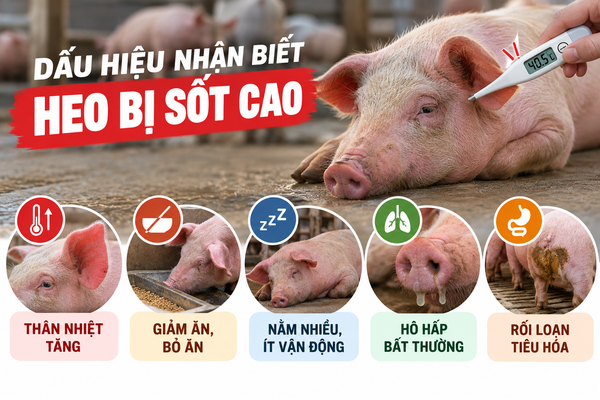
Farmers should monitor their herds daily to identify high fever in pigs, loss of appetite, lethargy, and other abnormal signs as early as possible. Early detection helps farmers respond promptly and reduce the risk of disease spreading throughout the herd.
Elevated body temperature: Pigs may feel warmer than usual and appear lethargic. Use a thermometer to check their temperature rather than relying only on the ears or skin.
Reduced appetite or refusal to eat: Pigs may eat more slowly, consume less feed, or lose interest in food entirely.
Lethargy and reduced activity: Pigs may respond slowly, separate themselves from the group, or appear weaker than usual.
Abnormal respiratory signs: Rapid breathing, coughing, nasal discharge, or difficulty breathing may occur.
Digestive disturbances: Diarrhea, dehydration, or other abnormal signs may develop.
These signs are not specific to a single disease. If pigs experience difficulty breathing, cannot stand, show signs of bleeding, or if several animals become ill at the same time, contact a veterinarian immediately.
4. How to Respond When Pigs Have a High Fever
4.1. Measure Body Temperature and Monitor Their Condition
Use an appropriate thermometer to measure body temperature and record feed intake, water consumption, and any accompanying symptoms. If several pigs are affected, record the number of sick animals, when the signs were first noticed, and how their condition progresses. This information will help the veterinarian assess the situation.
4.2. Adjust Housing Conditions
If heat stress is suspected, move pigs to a cooler area, improve ventilation appropriately, and ensure access to clean drinking water. Avoid pouring ice-cold water over pigs or cooling them abruptly. If pigs are shivering because of cold conditions, adjust the temperature appropriately instead of continuing to cool them.
4.3. Provide Water and Nutritional Support
Ensure that pigs have easy access to clean drinking water. If a pig remains alert and can eat and drink normally, provide good-quality feed in smaller portions if its appetite has decreased.
Do not force-feed or force water into pigs that have difficulty breathing, are drowsy, or cannot swallow normally, as this may cause aspiration. Electrolyte products and nutritional supplements should only be used when appropriate for the animal's condition and according to product instructions.
4.4. Use Veterinary Medicines Under Professional Guidance
Do not administer antipyretics, anti-inflammatory medicines, or antibiotics without appropriate professional guidance. Medication selection should take into account the underlying cause, the pig's age and body weight, and its overall health condition.
Contact a veterinarian immediately if a pig develops a high fever accompanied by difficulty breathing, rapidly worsening weakness, inability to stand, severe diarrhea, or bleeding. Veterinary assistance is also necessary if the fever persists or if several pigs develop a fever simultaneously or die suddenly.
If a dangerous infectious disease is suspected, do not transport or sell sick pigs to avoid spreading the disease.
5. How to Prevent High Fever in Pigs
To reduce the risk of disease and help prevent high fever in pigs, farmers should follow these practices:
Clean pig housing, feeders, and drinkers regularly. Ensure proper drainage and keep floors dry.
Adjust ventilation, roofing, and cooling systems appropriately to reduce the risk of high body temperature caused by hot weather and heat stress.
Provide good-quality, nutritionally balanced feed and continuous access to clean drinking water.
Maintain appropriate stocking density and minimize stress during transportation, weaning, and the mixing of pigs from different groups.
Quarantine newly introduced pigs, disinfect housing regularly, and control the movement of people and vehicles into and out of the farm.
Follow an appropriate vaccination program based on local disease risks and veterinary guidance to reduce the risk of infectious diseases that can cause fever.
Monitor feed intake, water consumption, and the health of the herd every day to detect abnormal signs early, particularly high fever in pigs, loss of appetite, and lethargy.
6. Conclusion
High fever in pigs can be caused by infectious diseases, infections, inflammation, or elevated body temperature associated with heat stress. Farmers should measure body temperature, observe accompanying symptoms, and monitor the entire herd to determine the appropriate response.
When pigs develop a high fever, prioritize access to clean drinking water, adjust environmental conditions when necessary, and contact a veterinarian if serious signs appear. Do not administer medicines without appropriate guidance or focus solely on lowering body temperature while ignoring the underlying cause.
Proactive housing sanitation, temperature management, and effective biosecurity practices can help protect herd health and improve overall farming efficiency.
