

How Manufacturers Ensure Veterinary Medicine Quality
Why Veterinary Medicine Quality Matters
The effectiveness of veterinary treatment depends not only on the active ingredients in a formulation but also on the quality, safety, stability and consistency of the finished product. Whether medicines are used for cattle, pigs, poultry, companion animals or aquaculture species, manufacturers must ensure that every batch meets established pharmaceutical specifications.
Veterinary medicine quality plays a critical role in animal health, disease prevention, food safety and the responsible use of veterinary medicines. Products with incorrect active ingredient concentrations, inadequate stability or microbial contamination may lead to treatment failure, adverse reactions and economic losses for livestock producers.

For example, an injectable antibiotic must contain the correct concentration of active pharmaceutical ingredients (APIs), meet applicable sterility requirements and maintain its physical and chemical stability throughout its shelf life. Similarly, oral powders and soluble medicines must have appropriate content uniformity, dissolution or dispersibility characteristics, depending on their formulation and intended use.
International manufacturers therefore establish comprehensive quality management systems based on Good Manufacturing Practices (GMP), validated production processes and scientifically appropriate laboratory testing. These systems help ensure that products consistently meet their approved specifications before reaching veterinarians, farmers and distributors.
1. GMP Standards Establish the Foundation of Product Quality
Good Manufacturing Practices (GMP) are fundamental to pharmaceutical quality assurance. They provide requirements and principles for controlling manufacturing environments, personnel, equipment, materials, production procedures and documentation.
For veterinary pharmaceutical factories, GMP compliance means that every stage of production must follow established procedures designed to prevent contamination, product mix-ups and manufacturing errors.
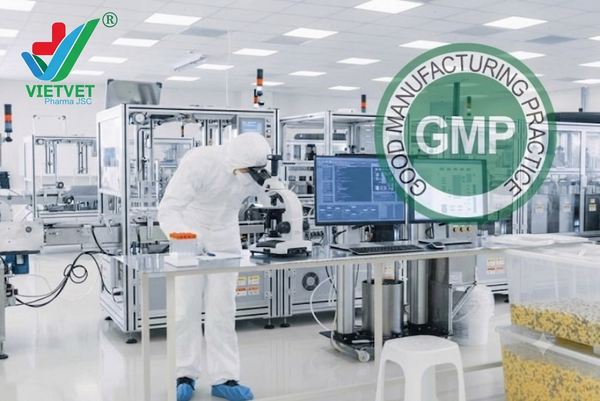
Manufacturing facilities should have suitable layouts that separate different operational areas, control personnel and material flows, and reduce the risk of cross-contamination. Production rooms, warehouses and laboratories must be maintained according to their intended functions.
Equipment used for mixing, granulation, filling, sterilization and packaging should be appropriately qualified, calibrated and maintained. Cleaning procedures must also be established and verified to prevent residues from previous production batches affecting subsequent products.
Employee training is equally important. Production technicians, laboratory analysts and quality assurance personnel must understand their responsibilities and follow approved Standard Operating Procedures (SOPs).
A strong GMP system does not simply focus on passing inspections. It establishes a consistent manufacturing culture in which product quality is considered at every stage of production.
2. Strict Raw Material Inspection Before Production
The quality of a finished veterinary medicine begins with the quality of its raw materials. Manufacturers must carefully evaluate active pharmaceutical ingredients, excipients, solvents, preservatives and packaging materials before approving them for use.
Active pharmaceutical ingredients are particularly important because they provide the therapeutic activity of a medicine. Their identity, purity, potency and impurity profile must meet approved specifications.

For example, when manufacturing doxycycline-based veterinary medicines, the manufacturer must verify the identity and assay of doxycycline hyclate and assess relevant impurities according to the applicable specifications. The quality of excipients must also be controlled because they can influence product stability, solubility, absorption and manufacturing performance.
Each incoming material should undergo appropriate sampling, identification and quality testing. Depending on the material, tests may include appearance, identification, assay, moisture content, microbial limits and other relevant parameters.
Manufacturers should also qualify suppliers and periodically evaluate their performance. Certificates of Analysis (CoA) provide important supporting information, but they do not automatically replace the manufacturer's own required verification and testing responsibilities.
Only materials that have been appropriately assessed and released by the quality unit should be used in production. This approach helps prevent substandard ingredients from entering the manufacturing process and protects the overall veterinary medicine quality system.
3. Advanced Laboratory Testing Ensures Product Consistency
Laboratory testing is one of the most important tools used to verify pharmaceutical quality. Quality Control (QC) laboratories examine raw materials, in-process samples and finished products to determine whether they comply with established specifications.
Modern veterinary pharmaceutical laboratories may use High-Performance Liquid Chromatography (HPLC), UV-Visible spectrophotometry, analytical balances, pH meters, dissolution testing equipment and microbiological testing facilities.
HPLC is particularly useful for determining the concentration of active ingredients and evaluating certain related substances or impurities. UV-Visible spectrophotometry can be applied to suitable compounds and validated analytical methods.
The specific tests depend on the dosage form and product characteristics. For example, injectable veterinary medicines may require testing for appearance, identification, assay, impurities, particulate matter and sterility, where applicable. Non-sterile oral powders may require tests for identification, assay, moisture content, uniformity and microbiological quality.

For tablets, dissolution and dosage-unit uniformity may be important quality attributes. For oral suspensions, manufacturers may evaluate particle characteristics, sedimentation, redispersibility and dose uniformity.
Aquaculture medicines and veterinary premixes also require suitable testing based on their formulations, intended administration methods and relevant product specifications.
A scientifically designed testing program helps manufacturers detect quality problems before products are released to the market.
4. In-Process Quality Control Prevents Manufacturing Errors
Finished-product testing alone cannot guarantee consistent quality. Manufacturers must also monitor critical parameters during production to identify deviations before they affect an entire batch.
In-process quality control involves checking important manufacturing conditions such as mixing time, temperature, pH, moisture content, particle size, filling volume and other formulation-specific parameters.
For example, when producing soluble veterinary powders, manufacturers must ensure that the blending process achieves appropriate uniformity throughout the batch. Poor mixing can result in uneven distribution of active ingredients, potentially causing differences in the amount of medicine delivered to animals.
For liquid formulations, monitoring pH, mixing conditions and filling volume can help maintain product consistency. Injectable products require additional controls appropriate to their sterile manufacturing processes, including environmental monitoring, validated sterilization or aseptic processing where applicable, and container-closure integrity.
Production records should document the materials used, equipment involved, processing conditions, test results and personnel responsible for each manufacturing stage.
When a deviation occurs, the manufacturer must investigate its potential impact on product quality, identify the root cause and implement appropriate Corrective and Preventive Actions (CAPA).
5. Stability Testing Protects Medicines Throughout Their Shelf Life
A veterinary medicine must maintain its required quality characteristics throughout its approved shelf life when stored under the specified conditions.
Stability testing evaluates how the physical, chemical and microbiological properties of a product change over time under defined storage conditions.
For pharmaceutical manufacturers, stability studies are essential for establishing or supporting shelf-life claims, storage instructions and suitable packaging systems.
Testing may include active ingredient concentration, degradation products, appearance, color, odor, pH, moisture content and other relevant quality attributes. Depending on the dosage form, additional tests may be necessary.
For example, liquid veterinary medicines may require monitoring for precipitation, phase separation or changes in pH. Powder formulations may need moisture and physical stability assessments. Injectable products require suitable stability assessments of their formulation and container-closure system.
Packaging materials also influence stability. Amber glass bottles, suitable plastic containers and tightly sealed packaging may help protect products from light, moisture, oxygen or other environmental factors, depending on the formulation.
Stability programs should use scientifically justified protocols and appropriate climatic conditions relevant to the intended markets. Manufacturers must also maintain ongoing stability monitoring where required by applicable regulations.
6. Microbiological Safety and Contamination Prevention
Microbiological quality is an essential component of veterinary pharmaceutical safety. Contamination by bacteria, yeasts, molds or other microorganisms can compromise product quality and create risks for treated animals.
Different dosage forms require different microbiological controls. Non-sterile oral medicines generally require appropriate microbial limit testing, while sterile injectable products must meet applicable sterility requirements.
Preservative effectiveness testing may also be relevant for certain multidose preparations. However, preservatives cannot replace appropriate manufacturing hygiene or contamination-control procedures.
Manufacturers should establish sanitation programs covering production rooms, equipment, utensils, water systems and other relevant surfaces. Environmental monitoring should be designed according to the risks associated with the manufacturing process.
For sterile products, the manufacturing environment requires stricter controls, including appropriate cleanroom classification, air handling, personnel gowning, environmental monitoring and validated sterilization or aseptic processing.
Water quality is another critical consideration. Pharmaceutical water systems must be designed, monitored and maintained according to the intended use of the water in manufacturing.
These measures help protect veterinary medicine quality and reduce the risk of contamination throughout production.
7. Batch Documentation and Final Product Release
Every pharmaceutical production batch must have complete and traceable documentation. Batch Manufacturing Records (BMRs) and Batch Packaging Records provide evidence that production activities were performed according to approved instructions.
These records typically include raw material batch numbers, quantities, manufacturing parameters, equipment identification, in-process test results, packaging details and relevant approvals.
Quality Assurance (QA) personnel review manufacturing and testing records to verify that all required procedures have been followed and that deviations have been appropriately investigated.
A batch should not be released simply because its packaging is complete. It must undergo the required quality review and release procedures under the applicable regulatory framework.
For veterinary medicinal products, batch certification and release responsibilities depend on the relevant national or regional regulations. Under the European Union veterinary GMP framework, batches must be certified by a qualified person before being released for sale or supply.
Retained samples should also be maintained according to applicable requirements. They provide valuable reference materials for future investigations, complaint handling and quality assessments.
8. Packaging, Storage and Distribution Maintain Product Integrity
Even a well-manufactured veterinary medicine can deteriorate if it is packaged, stored or transported incorrectly.
Packaging must be compatible with the formulation and provide appropriate protection against environmental conditions. Labels should clearly communicate essential information such as product name, active ingredients, concentration, dosage form, intended animal species, administration route, storage instructions, batch number and expiry date, as required by local regulations.
Storage conditions must follow the approved product specifications. Some veterinary medicines require protection from excessive heat, light or moisture, while certain biological products and vaccines may require a controlled cold chain.
Warehouses should use appropriate temperature and humidity monitoring systems where necessary. Products should be managed through suitable stock rotation procedures to reduce the risk of expired or damaged medicines being distributed.
Manufacturers should also establish procedures for handling customer complaints, suspected quality defects, product recalls and adverse events. Pharmacovigilance activities help collect and evaluate information about suspected adverse reactions following the use of veterinary medicinal products.
These activities extend quality management beyond the factory and support the safe use of veterinary medicines throughout the supply chain.
9. Choosing a Reliable Veterinary Medicine Manufacturer
For international importers and distributors, selecting a reliable manufacturing partner requires more than comparing product prices. Buyers should evaluate the manufacturer's production capabilities, quality management system, regulatory compliance and ability to maintain consistent product specifications.
A professional manufacturer should be able to provide relevant GMP documentation, product specifications, Certificates of Analysis, stability information and other technical documents appropriate to the product and target market.
OEM and private-label partnerships also require clearly defined quality responsibilities, approved formulations, packaging specifications and regulatory arrangements.
Manufacturers with experienced technical teams, well-equipped QC laboratories and systematic QA procedures are better positioned to support long-term international business relationships.
Ultimately, reliable veterinary medicine quality depends on the integration of qualified raw materials, controlled manufacturing processes, validated analytical methods, stability monitoring and effective quality management throughout the product lifecycle.
