

WHAT ARE NH₃ AND H₂S IN AQUACULTURE PONDS? WHY SHOULD FARMERS MONITOR THEM?
In aquaculture, water quality is one of the key factors determining the health, growth performance, and survival rate of aquatic animals. In addition to parameters such as pH, temperature, alkalinity, and dissolved oxygen, NH₃ and H₂S in aquaculture ponds are two toxic substances that farmers need to pay particular attention to.
These toxic compounds can be generated during the decomposition of organic matter, uneaten feed, and accumulated waste in ponds. When their concentrations become too high, NH₃ and H₂S can cause reduced feed intake, slow growth, damage to respiratory organs, and increased mortality in aquatic animals.
So, what are NH₃ and H₂S in aquaculture ponds? What causes them to form, how do they affect aquatic animals, and how can they be controlled to protect shrimp and fish health? Let's explore these topics with Vietvet Pharma in the following article.
1. What Is NH₃ in Aquaculture Ponds?
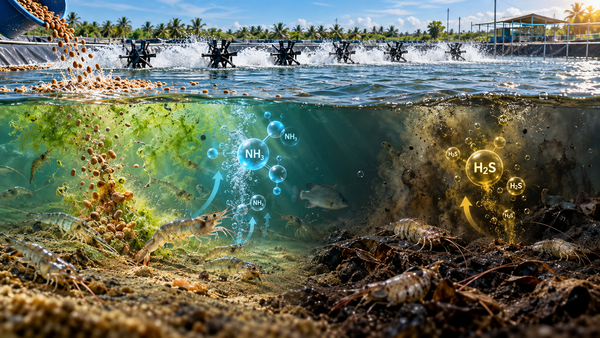
NH₃ (ammonia) is a nitrogen compound that can be toxic to aquatic animals. In water, ammonia exists primarily in two forms:
NH₃ (unionized ammonia): Highly toxic and capable of adversely affecting the health of shrimp and fish.
NH₄⁺ (ammonium ion): Considerably less toxic than NH₃.
The total amount of nitrogen present in these two forms is referred to as TAN (Total Ammonia Nitrogen).
In aquaculture ponds, NH₃ originates from the excretion of aquatic animals and the decomposition of nitrogen-containing organic compounds.
Notably, as water pH and temperature increase, the proportion of unionized NH₃ also increases, potentially making its toxic effects more severe.
Causes of High NH₃ Levels in Aquaculture Ponds
Common causes include:
Uneaten feed accumulating in the pond over time.
Shrimp and fish feces and other waste not being effectively removed or decomposed.
High stocking densities that increase the amount of waste generated.
Excessive algal growth that raises water pH during the daytime.
Inefficient waste treatment systems and nitrogen conversion processes.
When NH₃ accumulates at toxic concentrations, shrimp and fish may experience reduced feed intake, gill damage, slow growth, and declining health.
2. What Is H₂S in Aquaculture Ponds?
H₂S (hydrogen sulfide) is a toxic gas commonly found in pond-bottom areas where large amounts of sludge and organic matter accumulate under oxygen-deficient conditions.
H₂S is primarily produced by the activity of sulfate-reducing bacteria in anaerobic environments.
Hydrogen sulfide has a characteristic rotten-egg odor. However, the absence of an unusual smell does not necessarily mean that the pond is free of toxic gases.
In water, H₂S exists in equilibrium with other sulfide species, primarily HS⁻. As pH decreases, the proportion of unionized H₂S tends to increase, raising the risk of toxicity to aquatic animals.
Causes of H₂S Formation in Aquaculture Ponds
Excessive accumulation of sludge, feces, and uneaten feed on the pond bottom.
Low oxygen levels near the pond bottom, creating anaerobic conditions.
Inadequate pond management and irregular waste removal.
Inefficient operation of paddlewheel aerators and aeration systems.
Poor water circulation in certain bottom areas, allowing organic matter to accumulate.
H₂S can interfere with cellular respiration, preventing shrimp and fish from using oxygen efficiently. Exposure to high concentrations may cause severe weakness and even death.
3. Effects of NH₃ and H₂S on Shrimp and Fish in Aquaculture Ponds
When NH₃ and H₂S in aquaculture ponds accumulate at toxic concentrations, they can directly affect aquatic animal health and farming productivity.
3.1. Reduced Feed Intake and Slow Growth
Toxic gases can cause stress, disrupt physiological functions, and affect the feeding behavior of shrimp and fish.
When these conditions persist, aquatic animals may grow more slowly, show uneven size distribution, and require a longer production cycle.
3.2. Impaired Respiratory Function
NH₃ can irritate and damage gill tissues, affecting the ability of shrimp and fish to exchange gases.
Meanwhile, H₂S can inhibit cellular respiration, making it difficult for aquatic animals to use oxygen to sustain vital functions.
The risks may become more severe when toxic gases occur alongside low dissolved oxygen levels.
3.3. Deterioration of Aquatic Animal Health
Prolonged exposure to toxic gases can cause stress, weaken shrimp and fish, and reduce their ability to withstand unfavorable environmental changes.
This may increase the risk of health problems during the production cycle.
3.4. Increased Mortality Risk and Economic Losses
When toxic gases are not properly controlled, shrimp and fish may grow slowly, experience lower survival rates, and face an increased risk of mass mortality in severe cases.
As a result, production costs may rise, harvest yields may decline, and the overall economic efficiency of the farming cycle may be adversely affected.
4. How to Recognize Signs of NH₃ and H₂S Accumulation in Aquaculture Ponds
Recognizing unusual signs early helps farmers check water quality and take preventive measures to minimize losses.
Some signs to watch for include:
Reduced feed intake: An unusual decrease in the amount of feed consumed.
Abnormal behavior: Fish gasping at the surface or gathering near areas with water movement or aeration.
Slow growth: Poor growth performance and uneven size distribution among aquatic animals.
Excessive black sludge on the pond bottom: A rotten-egg odor may be released when the sediment is disturbed.
Fluctuating water quality: Unusual changes in pH, dissolved oxygen, and other environmental parameters.
However, these signs may also be associated with oxygen deficiency, disease, or other environmental problems.
Therefore, farmers should not rely solely on external symptoms. Water quality parameters should also be tested to help identify the underlying cause.
5. Why Should NH₃ and H₂S Levels in Aquaculture Ponds Be Monitored Regularly?
Monitoring NH₃ and H₂S in aquaculture ponds helps farmers detect potential risks early and proactively adjust pond management and husbandry practices.
Early Detection of Toxic Gas Risks
Regular testing helps identify unusual changes before shrimp and fish develop severe symptoms.
Protecting Shrimp and Fish Health
Well-managed water quality helps reduce stress, supports respiratory function, and creates favorable conditions for aquatic animals to grow.
Reducing the Risk of Mortality
Early detection and timely management of environmental problems help minimize the risk of weakness or death caused by exposure to toxic gases.
Improving Economic Efficiency
Maintaining stable water quality can contribute to better feed utilization, reduce the costs of dealing with environmental emergencies, and improve the overall efficiency of the farming cycle.
6. Effective Ways to Control NH₃ and H₂S in Aquaculture Ponds
To minimize the accumulation of toxic gases, farmers should combine multiple pond management measures rather than focusing solely on treatment after shrimp and fish show abnormal signs.
6.1. Manage Feeding Properly
Provide feed according to the animals' actual needs, adjust feeding rates to their growth stages, and regularly monitor feeding activity.
Reducing uneaten feed helps minimize organic matter accumulation, thereby contributing to better control of toxic gas formation.
6.2. Maintain Stable Dissolved Oxygen Levels
Operate paddlewheel aerators and aeration systems appropriately to maintain sufficient oxygen for aquatic animals and support aerobic organic matter decomposition.
Particular attention should be paid to dissolved oxygen levels at night and in the early morning, when ponds are more susceptible to oxygen depletion.
6.3. Manage Pond Waste and Bottom Sediment
Regularly inspect the pond bottom, remove waste from areas where sludge accumulates, and maintain adequate water circulation.
In ponds equipped with siphon systems, operate them correctly to reduce organic matter accumulation and prevent the formation of anaerobic zones on the pond bottom.
6.4. Monitor pH, Temperature, and Other Water Quality Parameters
Water pH and temperature directly influence the proportion of unionized NH₃ in the water.
Meanwhile, decreasing pH can increase the proportion of H₂S in its toxic, unionized form.
Therefore, farmers should check pH regularly, avoid sudden fluctuations, and maintain water quality parameters within the appropriate ranges for each cultured species.
Note: Do not use lime or chemicals to alter pH without first thoroughly assessing the pond's environmental conditions. Increasing pH can raise the toxicity risk associated with NH₃.
6.5. Use Appropriate Environmental Treatment Products
Some microbial products can help decompose organic matter and promote the conversion of nitrogen-containing compounds in aquaculture ponds.
However, their effectiveness depends on the microbial strains, product quality, and actual environmental conditions.
Farmers should select suitable products, follow the recommended application instructions, and combine their use with proper feed management, dissolved oxygen control, and waste management.

7. Important Considerations When Testing NH₃ and H₂S in Aquaculture Ponds
To accurately assess toxic gas risks, farmers should pay attention to the following points:
First, distinguish between NH₃ and TAN. Many ammonia test kits measure total ammonia nitrogen (TAN) rather than NH₃ alone. TAN results should be interpreted alongside pH, temperature, and water conditions to estimate the proportion of NH₃.
Second, test water quality at appropriate times. Water pH typically increases in the afternoon due to algal photosynthesis, potentially increasing the proportion of toxic NH₃. Meanwhile, oxygen depletion is often a greater concern at night and in the early morning.
Third, pay attention to the pond bottom. H₂S can form and accumulate in anaerobic bottom sediment. Therefore, testing only surface water may not fully reflect the risks present near the pond bottom.
Fourth, use appropriate testing equipment. Choose test kits with clear instructions, pay attention to measurement units, and compare the results with the recommended thresholds for each cultured species.
8. Conclusion
NH₃ and H₂S in aquaculture ponds are two important environmental hazards that can affect the health, growth performance, and survival rates of shrimp and fish when they accumulate at toxic concentrations.
To control these hazards effectively, farmers should focus on proper feed management, maintaining dissolved oxygen levels, managing pond-bottom waste, and regularly monitoring water quality parameters.
Proactive control of NH₃ and H₂S in aquaculture ponds not only helps protect shrimp and fish health but also contributes to reducing risks, lowering production costs, and improving the economic efficiency of each farming cycle.
