

PHARMA VETERINARY PRODUCTS: INSIDE A MODERN GMP-WHO FACTORY
Discover How Vietvet Pharma Combines Modern Manufacturing, Quality Standards, and Veterinary Expertise to Support Animal Health Worldwide
What makes a veterinary medicine truly reliable? Is it the active ingredient, the manufacturing technology, or the quality control process behind every bottle, vial, and package?
The answer lies in all three.
As the global livestock and aquaculture industries continue to evolve, the demand for high-quality Pharma Veterinary Products has become increasingly important. Farmers, veterinarians, and pharmaceutical distributors need more than just effective formulations. They need products manufactured under controlled conditions, supported by appropriate quality assurance systems, and supplied by dependable manufacturers.
Behind every veterinary pharmaceutical product is a complex manufacturing process where science, technology, and quality management work together.
At Vietvet Pharma, a Vietnamese veterinary pharmaceutical company established in 1999, the commitment to animal healthcare is supported by decades of industry experience and a focus on pharmaceutical manufacturing quality.
Let's explore what happens inside a modern GMP-WHO veterinary pharmaceutical factory and discover why manufacturing standards matter in today's animal healthcare industry.
1. Why Pharma Veterinary Products Matter in Modern Animal Healthcare
Animal health plays a fundamental role in global food production.
From poultry and swine farms to cattle operations and aquaculture facilities, maintaining healthy animals is essential for productivity, animal welfare, and food safety.
However, modern farming environments face numerous challenges, including infectious diseases, environmental stress, changing weather conditions, and increasing pressure to improve production efficiency.
This is where Pharma Veterinary Products become an important component of comprehensive animal healthcare programs.
Veterinary pharmaceutical products serve several purposes:
Disease treatment: Helping veterinarians manage bacterial infections and other animal health conditions requiring medication.
Nutritional support: Providing vitamins, minerals, and essential nutrients to support normal animal development.
Health management: Supporting animal recovery and physiological functions through appropriate healthcare products.
Farm productivity: Helping maintain animal health as part of effective livestock management.
Aquaculture healthcare: Providing suitable veterinary solutions for fish and shrimp farming operations.
Yet pharmaceutical effectiveness depends on more than formulation alone.
Manufacturing consistency, product stability, appropriate storage, and responsible administration are equally important.
For this reason, modern veterinary pharmaceutical manufacturers place significant emphasis on Good Manufacturing Practices.
2. What Is a GMP-WHO Veterinary Pharmaceutical Factory?
GMP stands for Good Manufacturing Practices, a system of quality assurance principles designed to ensure that pharmaceutical products are consistently produced and controlled according to established quality requirements.
The World Health Organization (WHO) provides internationally recognized GMP guidance for pharmaceutical manufacturing.
A modern GMP-based factory incorporates systematic controls throughout the production process.
These commonly include:
Controlled manufacturing environments.
Appropriate equipment cleaning and maintenance.
Raw material identification and quality evaluation.
Standardized manufacturing procedures.
Personnel training and hygiene requirements.
In-process quality control.
Finished product testing.
Batch documentation and traceability.
The purpose of these controls is to reduce manufacturing risks, prevent contamination, and improve consistency between production batches.
For veterinary pharmaceutical distributors, GMP compliance is an important consideration when evaluating potential manufacturing partners.
However, GMP certification applies to defined manufacturing activities and facilities. Product registration and import authorization must still be evaluated separately for each destination market.
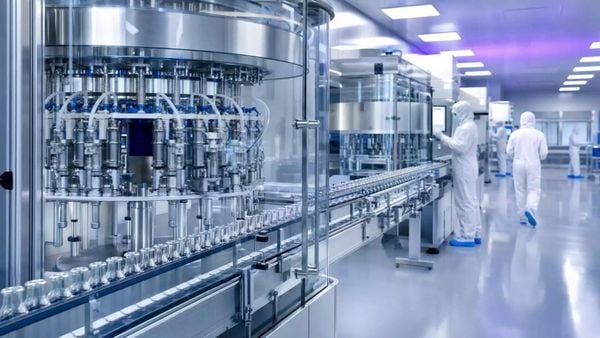
3. Inside a Modern Factory: How Pharma Veterinary Products Are Manufactured
Have you ever wondered how raw pharmaceutical ingredients become finished veterinary medicines ready for distribution?
Although the specific procedures depend on the dosage form and manufacturing facility, modern pharmaceutical production generally follows a carefully controlled sequence.
Step 1: Raw Material Selection and Quality Evaluation
Every pharmaceutical product begins with raw materials.
Active pharmaceutical ingredients (APIs), excipients, and packaging components must be suitable for their intended manufacturing applications.
Manufacturers operating under GMP principles establish procedures for material identification, supplier evaluation, storage, and quality verification.
Depending on the material, testing may involve evaluating its identity, purity, physical properties, or other relevant specifications.
Proper raw material control helps establish a reliable foundation for the entire manufacturing process.
Step 2: Pharmaceutical Formulation and Production
After suitable materials have been released for manufacturing, production begins according to approved procedures.
Different veterinary pharmaceutical formulations require different technologies.
For example:
Injectable veterinary medicines require manufacturing processes appropriate to their formulation, including stringent contamination controls and sterility assurance where applicable.
Oral powders and soluble products require controlled weighing, blending, and processing to support suitable ingredient distribution.
Liquid veterinary formulations may involve mixing, dissolving, filtration, and filling under specified conditions.
The objective is to produce medicines that consistently meet their approved quality specifications.
Step 3: In-Process Quality Control
Quality control does not begin only after manufacturing is completed.
In GMP-based production, important quality parameters are monitored during manufacturing.
Depending on the formulation, these controls may include:
Product appearance.
Filling weight or volume.
Mixing uniformity.
pH measurements.
Processing conditions.
Relevant environmental parameters.
By identifying potential deviations during production, manufacturers can take appropriate corrective action before products reach the final release stage.
Step 4: Finished Product Testing
Before finished pharmaceutical products are released, they undergo quality evaluation according to applicable specifications.
Testing requirements vary depending on the product category, dosage form, and regulatory requirements.
Relevant tests may include active ingredient content, microbiological quality, physical characteristics, and sterility where required.
Together with manufacturing records and quality assurance review, these evaluations support informed product release decisions.
Step 5: Packaging, Labeling, and Distribution
The final stage involves packaging products appropriately for storage, handling, and distribution.
Suitable packaging helps protect pharmaceutical products from environmental conditions that could affect product quality.
Accurate labeling also provides important information, such as:
Product identification.
Composition and strength.
Batch number.
Manufacturing and expiry dates.
Storage conditions.
Approved usage instructions.
For internationally distributed Pharma Veterinary Products, proper documentation and market-specific labeling requirements are especially important.
4. Vietvet Pharma: A Vietnamese Veterinary Pharmaceutical Manufacturer
Vietnam has developed an increasingly diverse pharmaceutical manufacturing sector, including companies serving the livestock and aquaculture industries.
Among these businesses is Vietvet Pharmaceutical Joint Stock Company (Vietvet Pharma).
Established in 1999, Vietvet has more than two decades of experience in the production, import, and distribution of veterinary pharmaceutical ingredients, finished veterinary medicines, and aquaculture healthcare products.
According to the company's published information, Vietvet has received GMP-WHO certification from Vietnam's competent veterinary authority and applies an ISO 9001 quality management system.
These quality management frameworks support Vietvet's long-term commitment to pharmaceutical manufacturing and animal healthcare.
Manufacturing Capabilities and Product Development
Vietvet Pharma operates in a sector where product consistency, manufacturing discipline, and regulatory compliance are essential.
Its business activities encompass veterinary pharmaceutical manufacturing and the supply of products for different animal healthcare applications.
The company continues to develop its product portfolio to serve livestock producers, veterinary professionals, and distribution partners.
By combining industry experience with a quality-focused manufacturing approach, Vietvet aims to strengthen its position as a veterinary pharmaceutical manufacturer in Vietnam and international markets.
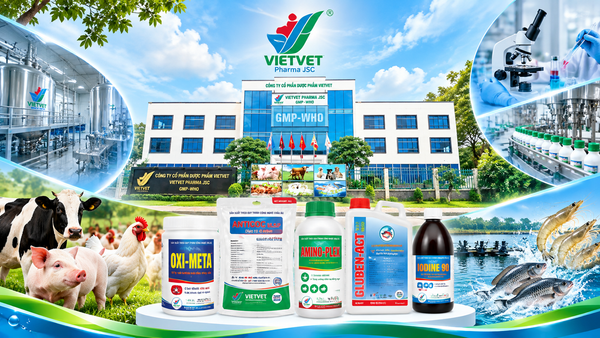
5. Veterinary Pharmaceutical Solutions for Different Animal Species
Modern animal healthcare requires diversified pharmaceutical solutions because different animal species face different health challenges.
Vietvet Pharma's portfolio includes products developed for various livestock and aquaculture applications.
Poultry Healthcare Products
Poultry production requires effective health management to address challenges associated with respiratory infections, gastrointestinal disorders, and nutritional deficiencies.
Relevant veterinary pharmaceutical categories include antibacterial medicines, nutritional supplements, vitamins, and supportive healthcare formulations.
Swine Healthcare Products
Pig farming involves important health management challenges throughout different production stages.
Veterinary medicines may be required to manage susceptible bacterial infections, while nutritional products can support normal physiological functions.
Appropriate veterinary supervision, farm hygiene, and preventive healthcare remain essential.
Cattle and Livestock Healthcare
Livestock operations require veterinary products suited to the health and management needs of different animal species.
Product selection should consider approved indications, administration requirements, and relevant withdrawal periods.
Aquaculture Healthcare Solutions
Fish and shrimp farming presents unique challenges associated with aquatic environments, disease management, and nutritional requirements.
Aquaculture healthcare products can support appropriate animal health programs when combined with water quality management, biosecurity, and responsible farming practices.
Through its diversified veterinary healthcare activities, Vietvet Pharma seeks to respond to the changing needs of modern animal production.
6. Why Manufacturing Quality Matters to International Distributors
For international buyers, choosing a veterinary pharmaceutical supplier involves more than comparing prices.
Reliable commercial partnerships depend on product suitability, regulatory compliance, manufacturing consistency, and clear communication.
When evaluating Pharma Veterinary Products, importers and distributors should consider several important factors.
Manufacturing Standards
Understanding a supplier's GMP status and approved manufacturing scope helps buyers evaluate pharmaceutical quality management capabilities.
Quality Documentation
Documents such as Certificates of Analysis (COA), GMP certificates, and Certificates of Free Sale (CFS), where applicable, can support product evaluation and registration procedures.
Product Registration
Each importing country has its own veterinary pharmaceutical regulations. Product eligibility and documentation must be reviewed according to the requirements of the destination market.
Packaging and Labeling
Appropriate packaging, accurate product information, and market-specific labeling support safe distribution and regulatory compliance.
Long-Term Supply Cooperation
Effective partnerships also depend on transparent communication, realistic production schedules, and coordination between manufacturers and distributors.
For international businesses interested in sourcing veterinary medicines from Vietnam, Vietvet Pharma offers opportunities to explore product supply and distribution cooperation.
7. The Future of Pharma Veterinary Products: Quality, Technology, and Sustainability
The veterinary pharmaceutical industry continues to evolve as animal healthcare requirements become increasingly sophisticated.
Several developments are shaping the future of veterinary pharmaceutical manufacturing.
Advanced Manufacturing Technology
Modern equipment, automation, and improved process monitoring can help manufacturers strengthen operational efficiency and manufacturing consistency.
Digital Quality Management
Electronic documentation and improved traceability systems can enhance pharmaceutical quality management and supply chain transparency.
Responsible Veterinary Medicine Use
Responsible antimicrobial use is essential to addressing antimicrobial resistance.
Veterinary medicines should be administered according to approved indications, appropriate veterinary guidance, and applicable regulations.
International Market Development
As global animal production systems expand, manufacturers have opportunities to develop international relationships and serve new markets.
Success requires attention to manufacturing standards, product registration, quality documentation, and changing customer needs.
For Vietvet Pharma, continued development in these areas represents an opportunity to contribute to the advancement of Vietnam's veterinary pharmaceutical industry.
8. Why Choose Vietvet Pharma as Your Veterinary Pharmaceutical Partner?
Selecting the right manufacturer is an important step toward building a sustainable veterinary pharmaceutical distribution business.
With its history dating back to 1999, Vietvet Pharma brings substantial industry experience to the Vietnamese veterinary medicine sector.
The company focuses on veterinary pharmaceutical products for livestock and aquaculture while pursuing opportunities for manufacturing development and international cooperation.
For potential business partners, Vietvet offers several areas worth exploring:
Veterinary pharmaceutical product supply.
Diverse livestock and aquaculture healthcare categories.
Quality-focused manufacturing operations.
Product and regulatory documentation discussions.
International distribution opportunities.
Long-term business cooperation.
Specific product specifications, certifications, availability, and registration requirements should be confirmed directly with the company.
Conclusion: Quality Pharma Veterinary Products Begin With Responsible Manufacturing
The journey from pharmaceutical ingredients to finished veterinary medicines involves much more than production equipment.
It requires scientific knowledge, controlled manufacturing procedures, appropriate quality testing, and a commitment to continuous improvement.
As animal healthcare becomes increasingly important to global agriculture, demand for dependable Pharma Veterinary Products creates opportunities for manufacturers that prioritize pharmaceutical quality and responsible business practices.
Modern GMP principles provide an essential framework for supporting consistent manufacturing processes and maintaining product quality.
With more than two decades of industry experience, Vietvet Pharma continues to pursue its mission of providing veterinary pharmaceutical solutions and developing partnerships in the animal healthcare industry.
